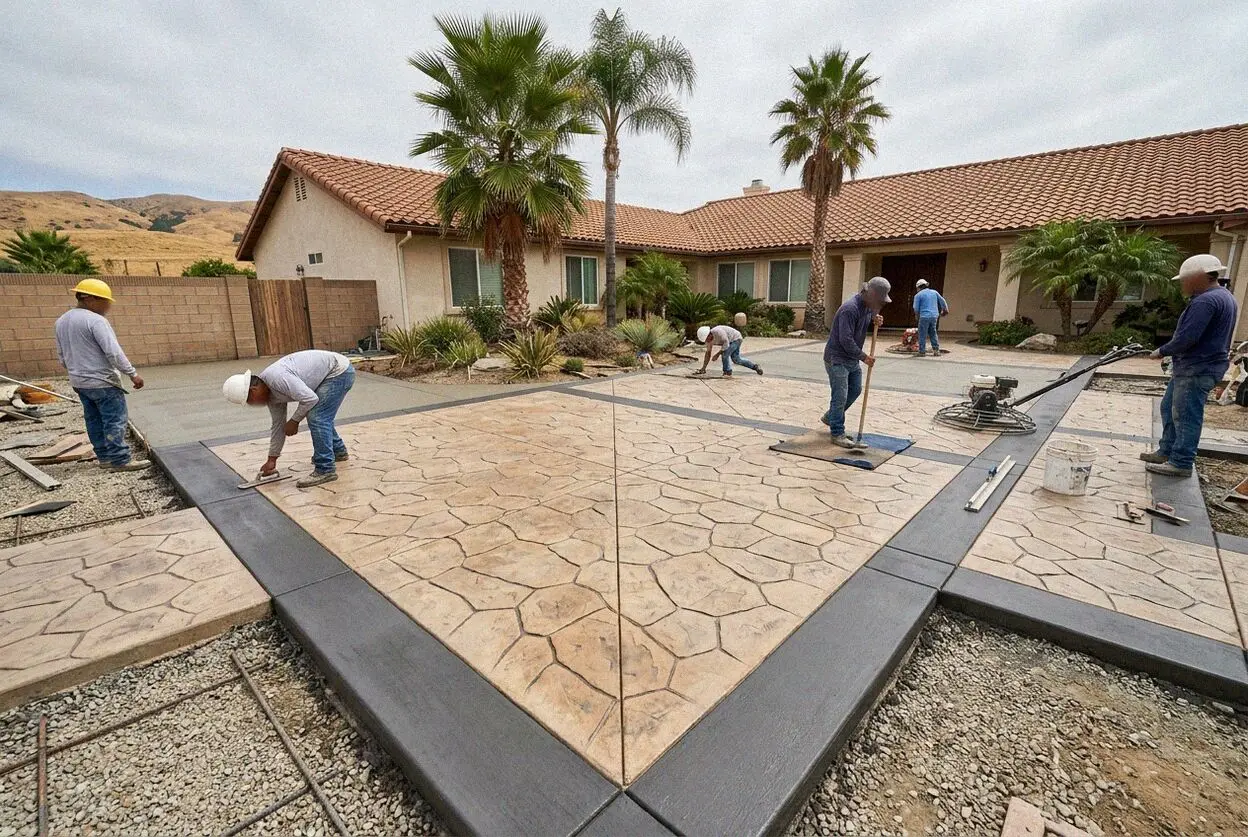
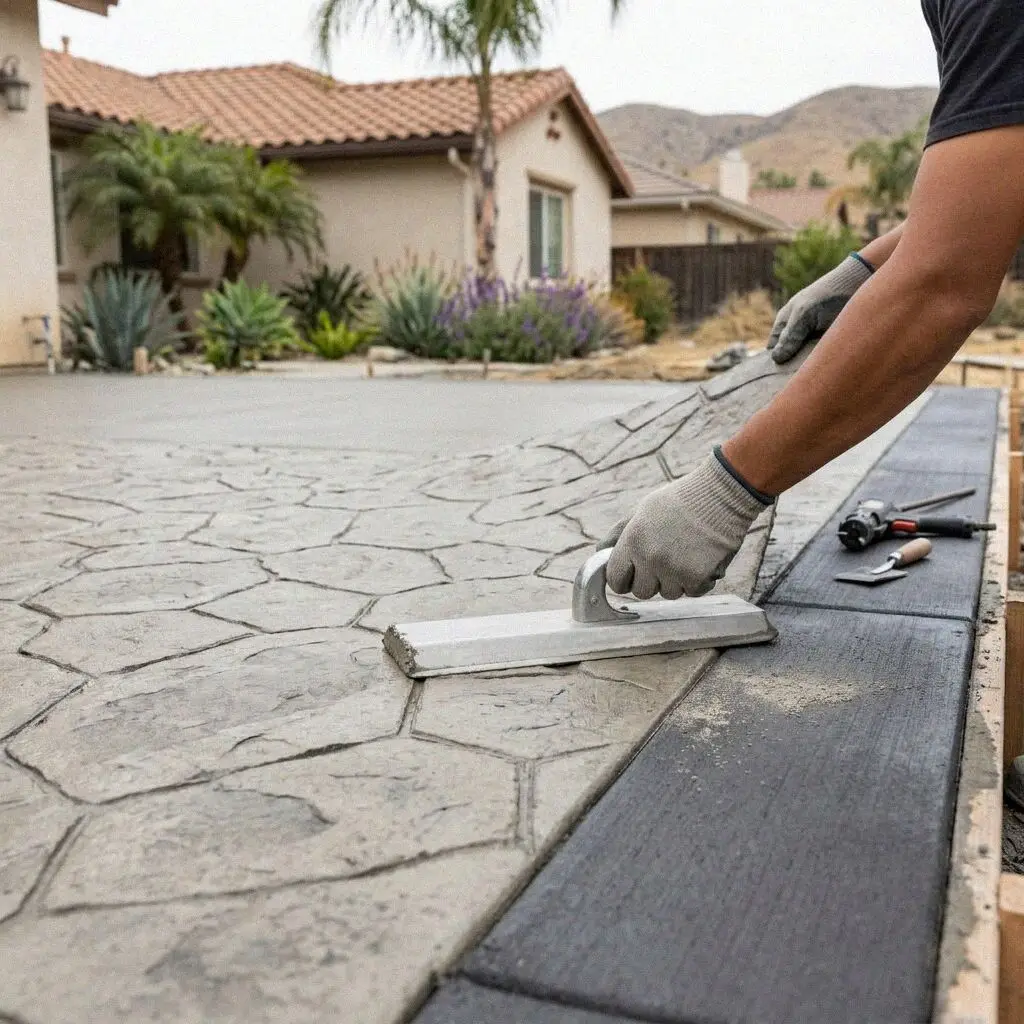
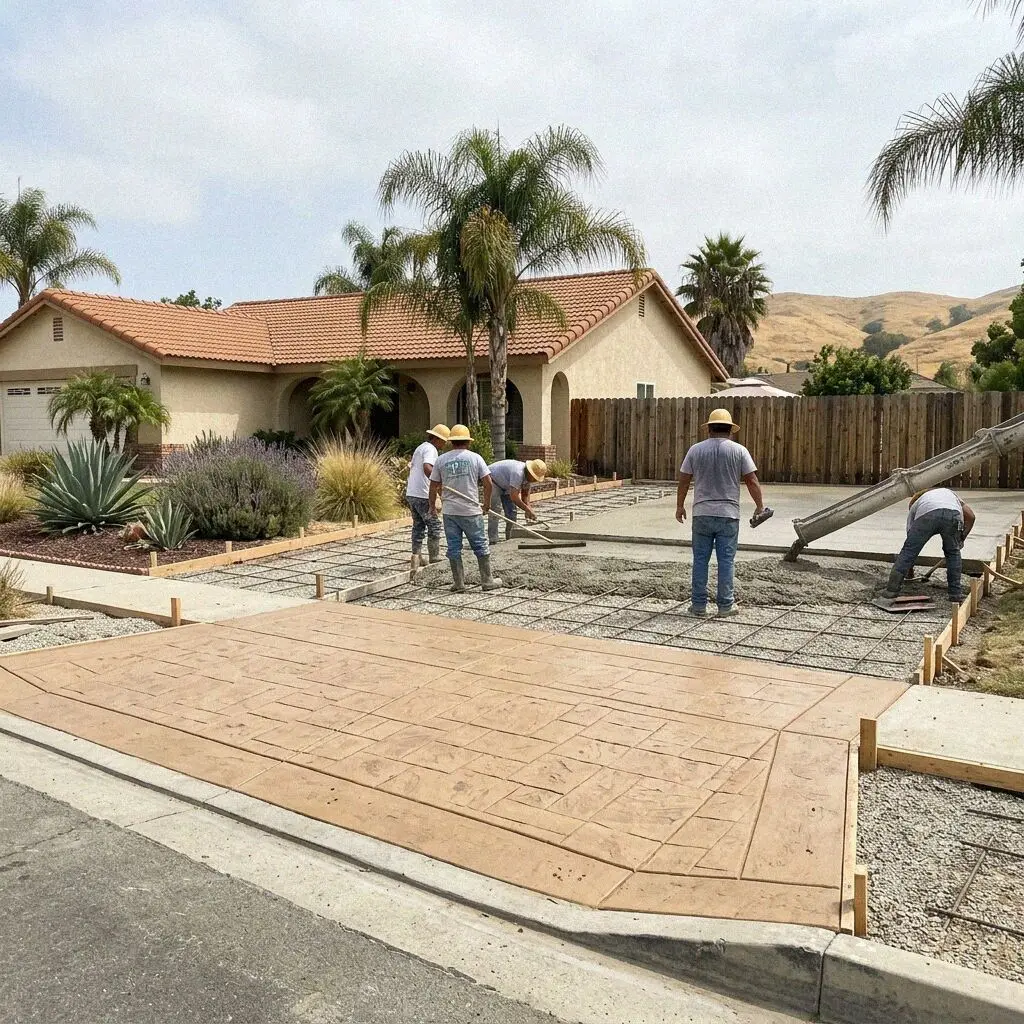
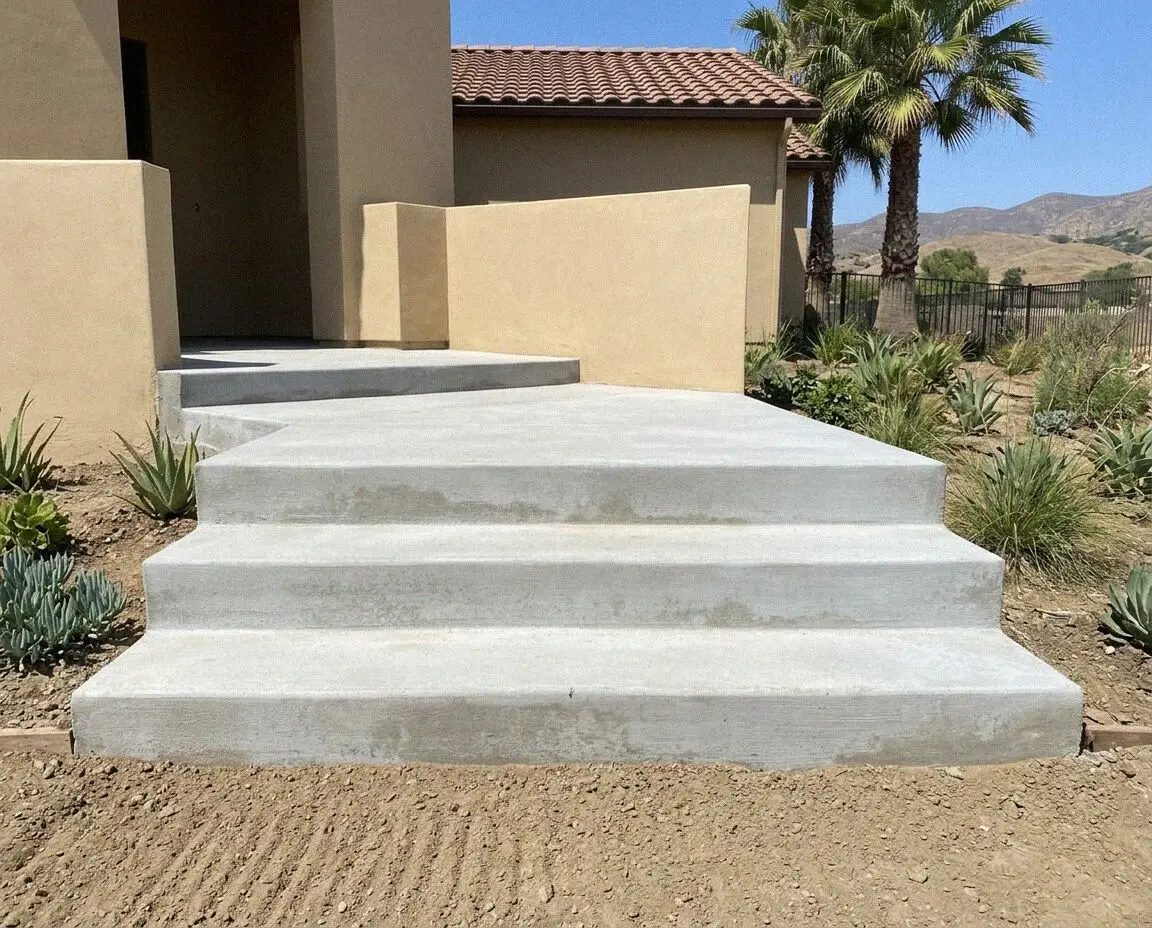
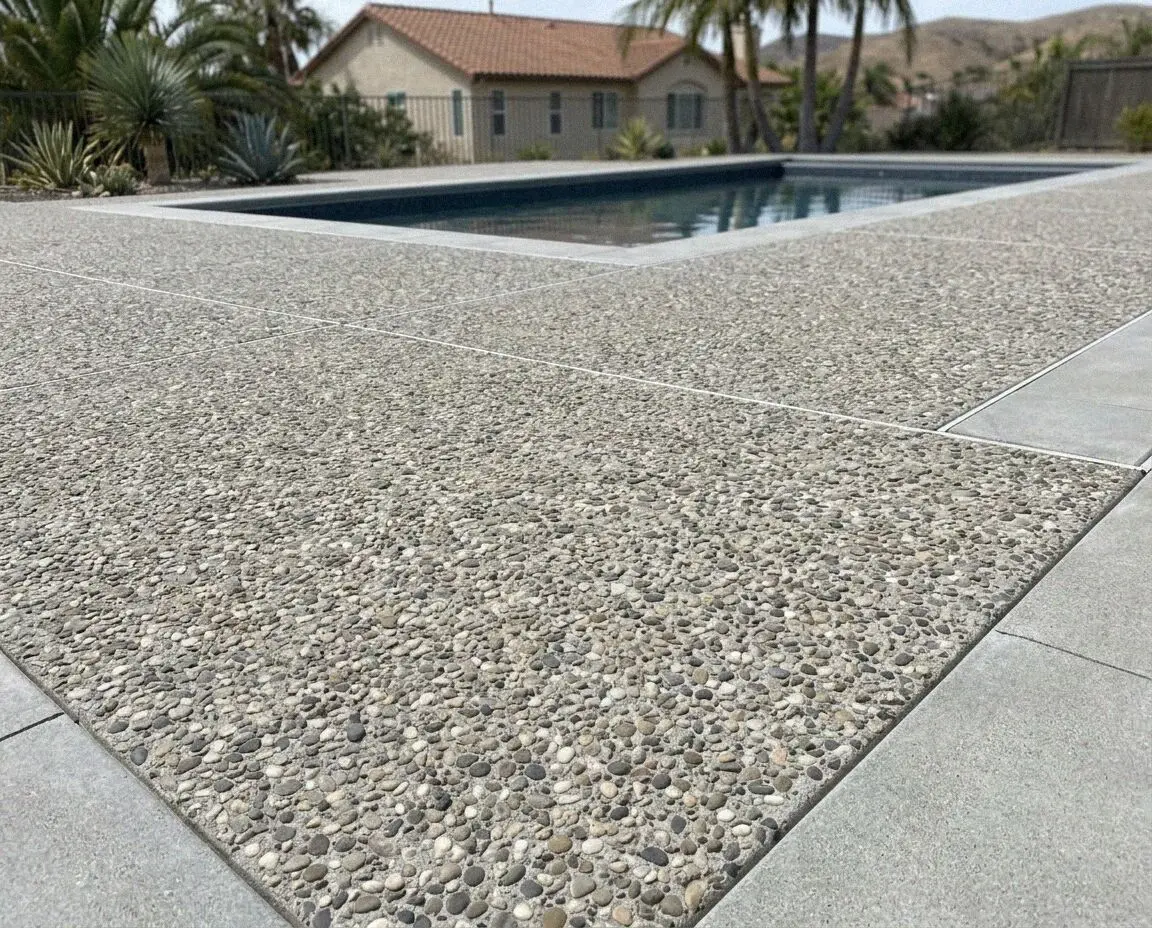
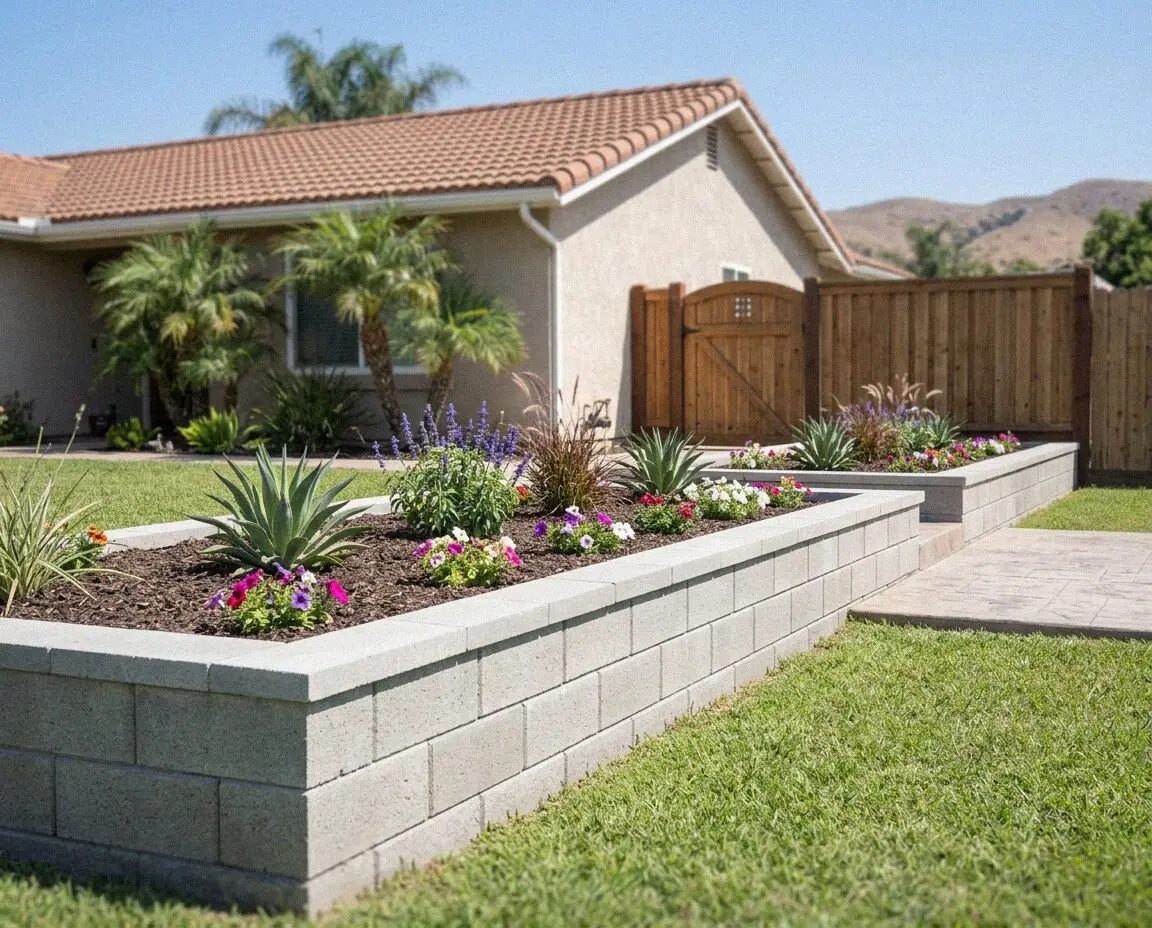
A stamped slab is judged at its edges, not in its middle. The middle of any pattern looks right because the mats repeat; what a reader sees from the kitchen door is where the pattern runs into the house wall, the block wall on the lot line and the side walk, and whether it arrives as a whole stone or a sliver. On a tract lot the slab is hemmed in on three sides before anyone measures it, so the layout is drawn from those fixed edges inward and the pour is ordered to fit the drawing.
Katella Anaheim Concrete has stamped concrete in this city since 2016. Omar Espinoza came to it after 22 years on flatwork crews, most of it pressing patterns for other contractors, and he still sets the first mat on every job because the first mat fixes the line every other one follows. The two of us who stamp have worked the same mats together for years, and a pattern pressed by four hands that know each other has no seam where one person's row met the other's.
The work is done under a CSLB C-8 concrete license with liability insurance on every job, and the slab under the pattern is poured to the California Residential Code like any other. A rear patio inside your own boundary needs no permit; a stamped apron reaching the sidewalk is right-of-way work, filed with Public Works before the old one is broken. The surface leaves with a written workmanship guarantee against defects in how it was built.