Serving Anaheim, CA and surrounding areas.(657) 220-6196
Katella Anaheim Concrete

Anaheim, CA Driveways: One City, Two Kinds of Ground Underneath

A drive is the only slab you own that takes a rolling wheel and then runs out across the pavement line. Which half of the city it sits on decides what goes underneath, and that is read on your frontage first.

Google reviewsFacebook reviewsBetter Business Bureau reviews5.0 Stars Rated by Anaheim customers · Google, Facebook and the BBB
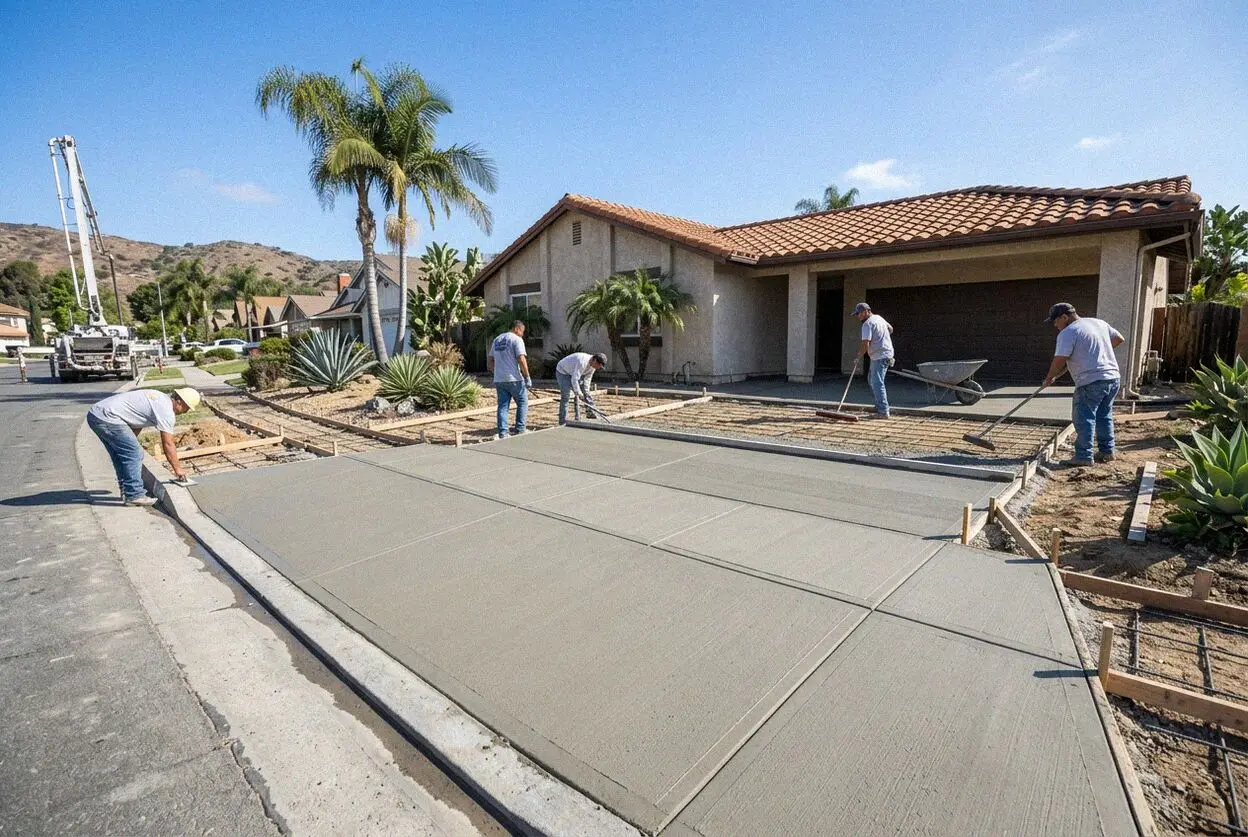
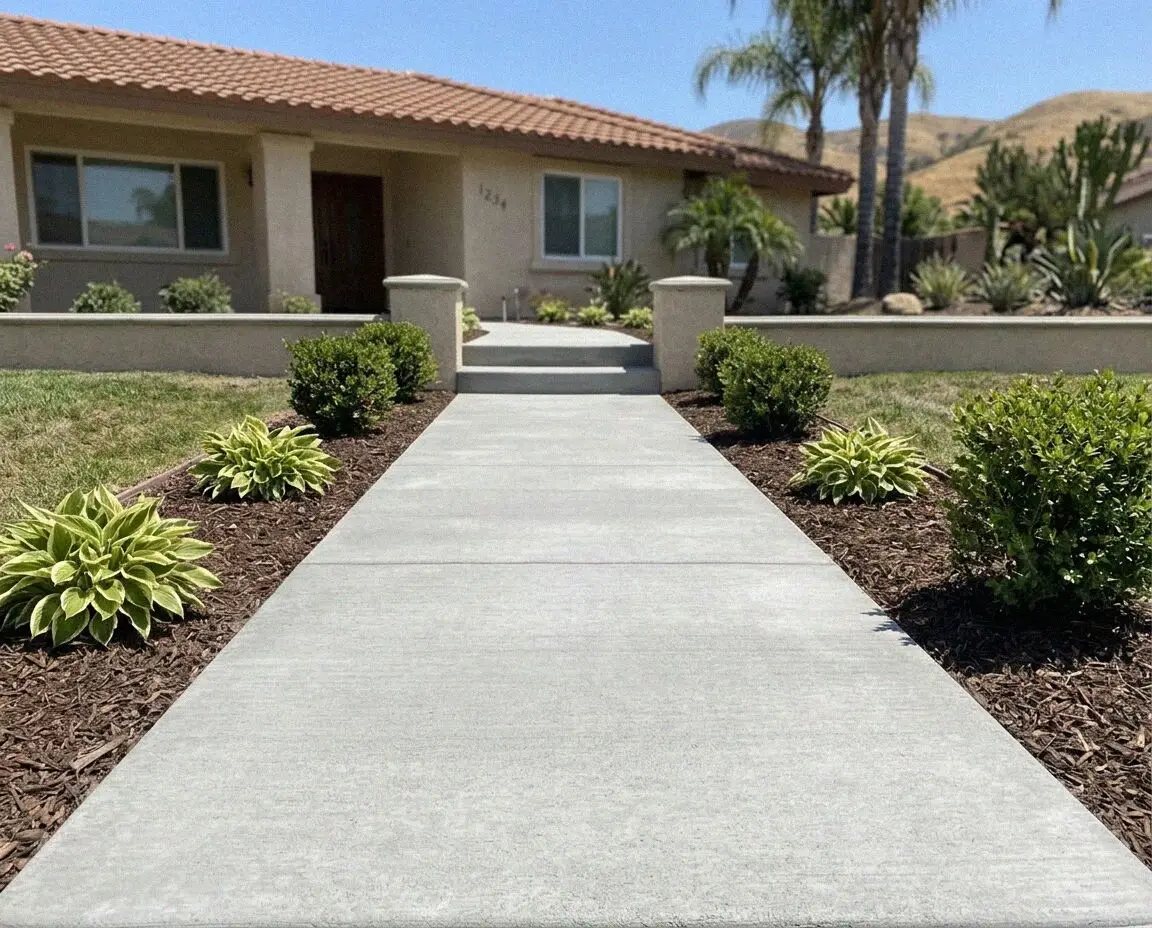
New concrete driveway running to an attached garage on an Anaheim frontage
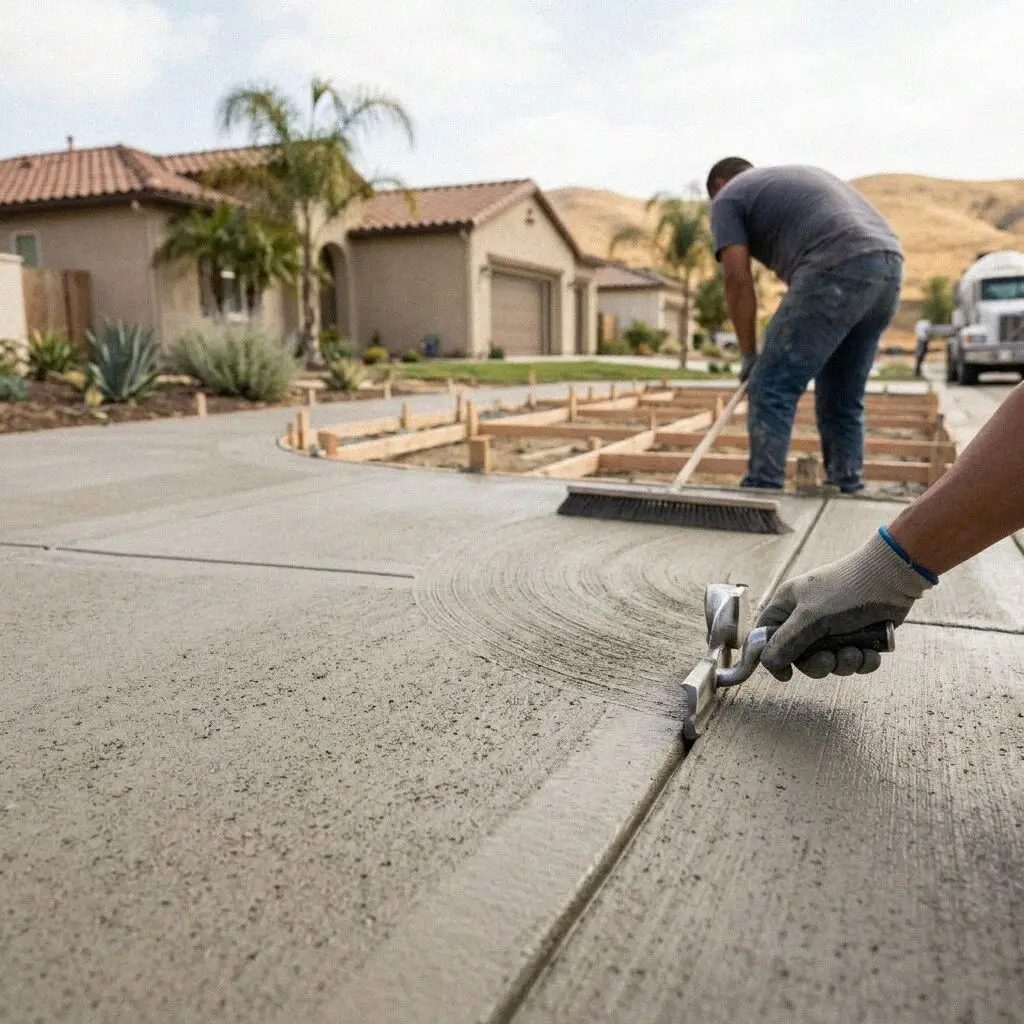
Crew placing a new concrete driveway at a house in Anaheim, CA

What a drive has to carry

The Two Subgrades an Anaheim Drive Gets Poured On

Of everything poured on a property, the drive is the one a two-ton wheel tracks over in the same two lines every day, so what lies beneath counts for more than what is troweled on top. Under the flat half of the city the survey returns San Emigdio fine sandy loam beneath the colony grid and Metz loamy sand west of that, both of them wash off the Santa Ana, 70 to 85 percent sand against 13 percent clay, at a shrink-swell near 1.2. That ground never heaves. What it takes away is support.

East of that, on the canyon side, the tracts of the 1970s and 1980s were graded pad by pad, cut into the hill with the spoil compacted onto the low side, and their drives run from the garage down a made gradient to the curb. The soil mapped there is Alo clay at 48 percent clay, shrink-swell 9.3. Those tracts went in between 1970 and 1989, so a hillside drive still on its first slab is 40 to 55 years old, and a slab that age has usually outlived whatever base was rolled under it.

Katella Anaheim Concrete has been pouring here since 2016 under CSLB C-8, carried in Omar Espinoza's own name, with liability insurance on every job. A driveway sitting 30 inches or less above the grade beside it, over no basement or story below, is on the Residential Code's exempt list, which covers nearly every frontage in this city. Behind the finished slab stands a written workmanship guarantee against defects in how it was built.


When repairs stop holding

The Point Where Patching an Anaheim Drive Stops Paying

Two ruts where the tires run

Sight along the drive from the garage door on a low sun. Where the two wheel lines have dropped below the strip between them, the base under them has been pressed into the sand rather than the surface wearing away. Rain follows those lines to the street and takes more each winter.

The joint at the curb gapes

The last few feet of any drive sit in ground compacted when the street was built, to a standard nothing in your garden was held to. Once the slab and the approach pull apart, the joint gapes, grit packs into it and both edges begin to break away. Caulk buys a season, no more.

One panel proud of the next

On a graded pad, walk down to the street and run a shoe over every joint. A lip standing between two panels says the cut side and the filled side beneath are settling at different rates, which grinding does not reach. Take the step off the top and it returns, on that same joint.

Cracks that ignore the saw cuts

A drive is sawn so that shrinkage goes where it was told to go. A crack running diagonally across a panel and straight through a joint is not shrinkage, it is the slab bridging ground that has softened under one part of it. Filling it puts the color back and leaves the void.

On every estimate

Eight Items on Every Anaheim Drive Sheet

Eight items, and all eight sit on the sheet for every drive we pour. None is an extra to trade away for a lower number: each exists because of what wash sand, hillside fill, a gray coastal morning or the city's split permitting does to a slab with a car on it.

The old drive gone

Broken up, loaded and away the same day, down to bare subgrade. Nothing new goes over the footprint of something that failed.

The dig read first

A bar goes into the floor of the excavation before rock is ordered, since wash sand and hillside fill want different depths built back.

Angular rock, not round

The gravel already in the wash is rounded and rolls under a wheel. Crushed rock comes in instead, laid and rolled in 4 inch lifts.

Depth answers the load

Depth answers to the load: 4 inches for a car, 5 to 6 where a truck or motorhome parks, 5 as a minimum on any graded pad.

Steel through the slab

Half-inch bar on an 18 inch grid, chaired so it ends up inside the pour rather than on the rock, in a 3,500 psi mix. Tickets stay on file.

Joints in by nightfall

Joints cut inside 12 hours, spaced no wider than 30 times the depth, with one laid over the fill line wherever we find one.

Fall taken to the street

Fall is run at a quarter inch per foot, off the garage threshold and out toward the curb, so nothing stands at the door after rain.

Seven days kept damp

Compound on that afternoon, then damp for a week. A surface let go dry early finishes weaker than the mix was ordered at.

Picking a surface

Four Driveway Surfaces on an Anaheim Frontage

What goes under all four is identical, so this is not a question of one lasting and the others not. It is what each does on a wash lot where the sand travels, or on a hill pad where half the ground keeps consolidating, and what each asks of you afterward.

OptionLife expectancyFrontage typeUpkeep askedOver moving ground
Brushed gray finish30 to 40 yearsAny frontage, curb up to the garage doorOne reseal in four or five yearsStays one plane across a soft spot
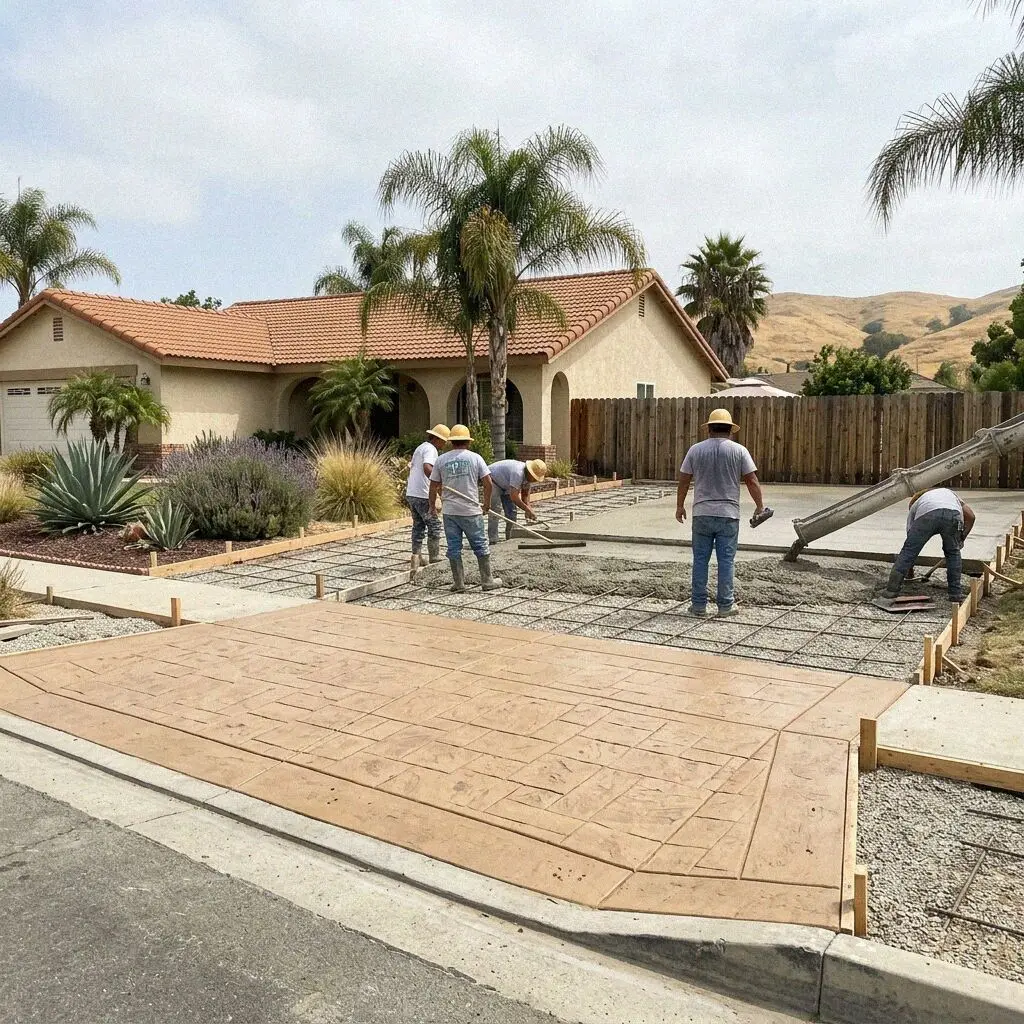
Stamped concrete25 to 30 yearsStreet-facing runs on the colony gridColor fades first, reseal at 2 to 3 yearsPattern makes a hairline easy to find
Exposed-aggregate mix35 years and upLong hill runs down to the streetA spring hose down, reseal on year 4Texture disguises a hairline better
Interlocked pavers30 to 50 yearsWest-side lots on migrating sandSweep joint sand back once a yearLifted and relaid a square at a time

Only one of the four lifts and goes back down a unit at a time, and only one holds a straight plane across a fill boundary.

Concrete driveway approach meeting the curb outside an Anaheim home

Past your boundary

Where an Anaheim Drive Stops Being Yours

A drive is the one job at a house that leaves the garden, crosses the parkway and lands in the street, and in this city those two ends answer to two separate systems.

Everything goes through one public portal, branded Anaheim NEXT, but Building and Public Works sit inside it as separate modules with their own records and their own inspectors. The concrete between your garage and the property line is Building's, on (714) 765-5153. The approach, the curb crossing and the parkway are Public Works, lodged and inspected on their own side of the portal. Both run out of 200 South Anaheim Boulevard.

That decides the shape of the week as much as the paperwork. With the approach in scope, the frontage is opened, the new crossing matched to the level the neighboring aprons sit at, and a Public Works inspector signs that stretch off on its own. Without it, we stop the pour dead on the line and tie into the old approach with a full-depth joint rather than feathering new concrete over the top, a feathered edge on this sand breaks first, and takes the corner behind it.

From tape to sweep

An Anaheim Driveway in Five Stages

Five stages, one crew and one figure. Omar Espinoza tapes the frontage himself, whatever paperwork the job needs is lodged from the office on West Katella Avenue, and nobody else is handed the work between the measure and the final sweep.

1

Frontage taped and probed

The run is measured, the fall to the curb taken, and a bar put down to find whether you are standing on river wash or on graded fill.

2

Paperwork lodged for you

Building for the concrete inside your line, Public Works for anything beyond it. Both go in from this office rather than being left with you.

3

Breaking out the old

Up in pieces and away for crushing. The excavation floor is then walked and read a second time before any rock is ordered in.

4

Rock, then steel, then mix

Rock goes down in rolled lifts, the forms are pinned to the falls, steel tied and chaired, then the truck once the damp has lifted.

5

Sawn, cured and walked

Joints in within 12 hours, compound on, frontage swept, and the drive walked against your sheet before anything is signed off.

Behind the estimate

What the Anaheim Driveway Figure Rests On

Area and depth start it and nothing else comes near them. After that it is what has to be dug out and carried away, how far it travels to reach the lorry, and whether the work stops at your boundary or carries on to the gutter.

What the old slab stands on

Older drives on the flat are often thin and laid straight onto sand with no rock at all. Building that depth back is dug and priced on the visit.

How the spoil gets out

Where a machine can get onto the frontage, the dig is a morning. Where every load has to go down a slope by barrow, it is not.

The part past your line

Stopping on the boundary is a single job. Taking in the approach and the parkway with it adds a second filing and a second inspector.

The gradient underneath

A hill drive wants more depth, more edge support and a joint set on the fill line, so it comes out dearer per foot than a level run.

Every estimate is measured and written on site, with demolition, base, pour, finish and haul-away broken out separately. The visit itself is not charged for. (657) 220-6196 or send us a message.

Get the Anaheim drive on paper

Ring the office on West Katella Avenue or leave the form. Omar Espinoza answers within 1 business day and comes to look at what you have: what the old slab stands on, where the water leaves, and what the crossing at the curb needs. The figure follows in writing.

Request a Free Estimate

Written on site · No obligation

By submitting, you agree to our disclosure and consent terms, including being contacted by Katella Anaheim Concrete.

From the frontage

Three Anaheim Drives, From the Owners

Three from the past two years, a colony-grid frontage rebuilt right out to the curb, a hillside run jointed on the line where its pad changes, and a west-side drive built for a truck and a fifth wheel.

Google review

“Ours came out all the way to the gutter, because the approach had dropped as far as the drive had, and they filed with both departments themselves instead of sending me to a counter. 470 square feet at five inches over ten inches of rock, and the inspector was gone by lunchtime.”

Santiago Y. of AnaheimDriveway and approach · Google · 2026
Facebook review

“Ours drops from the garage down to the road and had grown a lip across the middle you could feel through the wheel. Omar probed until he found where the cut met the fill and put a saw cut right along it. 520 square feet on, and it is one plane from the door to the street.”

Grant W. of Anaheim HillsHillside driveway · Facebook · 2026
BBB review

“There is a work truck and a fifth wheel on ours most of the year, so they took the depth to six inches and widened the last stretch rather than let the tires ride the edge. 640 square feet, placed in a morning, and after two winters not a broken corner on it.”

Dana R. of West AnaheimDriveway for an RV · BBB · 2025

Asked on the drive

Eight Answers Before an Anaheim Drive Is Booked

The curb crossing, widening, hill pads, curing times, gray mornings and what the written cover reaches, answered against a frontage in this city rather than against concrete in general.

(657) 220-6196
  • Who signs off the approach where my drive meets the street?

    Public Works does, from its own module of the city portal and with its own inspector. The approach, the curb crossing and the parkway belong to the street, not to you, so work on them is filed there rather than with Building on (714) 765-5153. We lodge it, meet the inspector and match the crossing to the level the aprons either side sit at. Inside your own line a drive 30 inches or less above grade is exempt.

  • Is this the moment to make the drive wider?

    Nearly always, and this is the cheapest hour it will ever cost, since the plant, the forms and the truck are on the lot regardless. What sets the limit is your frontage and what the crossing at the curb is allowed to be, so the width is agreed before the figure is written. One warning on the flat: a widening strip wants the same rock depth as the middle. Poured shallow onto sand, it breaks along the arris.

  • What does a hillside drive need that a flat one does not?

    More depth, support along both edges, and a joint sitting on the daylight line. Those pads were made by cutting into the slope and compacting the spoil onto the downhill side, so half the drive rests on ground that has been there for ever and half on fill still consolidating forty years on. We probe until the change shows on the bar, then saw a joint along it. Five inches is the floor on a graded pad.

  • How long until a car goes on the new slab?

    Seven days before a car, and 28 before anything heavy. Twenty-eight days is where a standard mix reaches its rated strength, which is why the Portland Cement Association sets its test at that age; an RV or a laden trailer at ten days is asking for strength the slab has not made. Feet can go on after a day. Parking early rarely shows as a crack that week, it shows as one panel sitting low a year on.

  • Is a gray coastal morning a problem for pouring?

    It moves the start rather than stopping it. A gray, damp morning slows the set, so the slab is not ready to be finished when a crew would normally be walking it, and floating it early traps that water at the surface. On those days the truck is booked later and the finishing runs into the afternoon. The pouring season here is long, autumn holds up into November, so there is rarely reason to rush a gray start.

  • Can a sunken driveway panel be lifted instead of replaced?

    It can be foam-jacked, and on this ground that buys a season or two rather than a decade. Lifting fills the void underneath but leaves the sand that let the void open, and water finds the same path back under the same edge. Where a panel has both dropped and cracked, or where no base was built under it to begin with, the honest answer is to take it out. Which of the two you have is said at the measure.

  • Which way is a new drive graded, and to where?

    Into the street gutter, on a fall of one quarter inch in every twelve, and always away from the garage threshold. On the flat that matters because water standing at the door soaks the subgrade under the slab edge, and San Emigdio sand carries away when it is wet and loaded at once. On a hill run the trouble is the reverse, too much speed, so the crossing at the curb is shaped to take the flow.

  • If the drive drops later, what do you put right?

    The workmanship: the dig depth, the rock we put back, the steel, the poured thickness, the joint layout and the finish, all of it printed on the sheet before any money moves. Where a panel has settled into subgrade we should have read properly, we break it out and pour it again at our own cost. Outside that sit tire scuffs, oil staining and a hairline arriving inside a saw cut, which is the joint doing its job.

Outside the city

Drives We Pour Around Anaheim

Below are the eight closest towns we cover, with the straight-line distance from the West Katella Avenue yard against each one. Another twelve stand behind them, and none of the twenty is further out than 25 miles.

Show All Areas We Serve

Book the Anaheim driveway measure

Use the form on this page, or ring the number at the top of it. Omar Espinoza replies within 1 business day and fixes a time to come and tape your frontage. What he leaves behind is a figure in writing, with nothing owed and nothing booked.